September 1, 2026
By Janis Cole
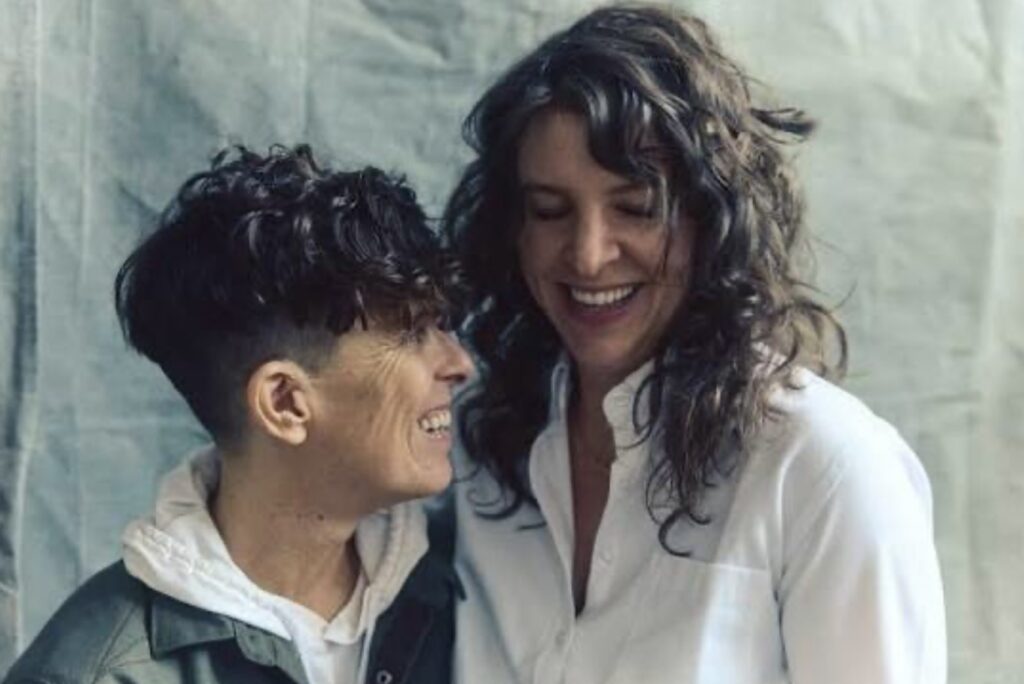
Prolific non-binary queer poet Andrea Gibson and their distinguished poet wife Megan Falley focus on human connection rather than tragedy in this moving portrait of love during terminal illness. The film showcases how the couple transforms a serious health challenge into a joyful celebration of life.
Come See Me in the Good Light takes viewers on Gibson’s personal journey as they try medications and trial drugs for life-threatening ovarian cancer. They and Falley experience fleeting hopes and longer disappointments while anxiously awaiting blood marker results in three week cycles. They discover the cancer is incurable and Gibson focuses on a fearless pursuit to get the most out of every second. It might sound like a downer but the film is way more joyful than sad. Medical treatments fade to a background timeline as the foreground fills with deep connection, laughter, quiet gratitude and a floodgate of love; for each other, their friends, family, three pet dogs, poetry, nature, doctors and pretty well everything. Their love is what makes the film so powerful.
The film not only embraces their relationship, it also opens a gateway to Gibson’s discerning poetry that masterfully cuts through the superficial to expose intricate emotional truths. Right after they reveal their cancer, they say, “My story is about happiness being easier to find once we realize we don’t have forever to find it”. They don’t see their diagnosis as a tragedy to endure, but a catalyst to open the beauty of every moment, which is how they hope others see it too.
Gibson’s spoken-word poetry is sharp and their delivery is urgent. Excerpts in the film reflect their process of finding exact words to describe complex human sensations. Their newfound bucket list, Little Things written through the lens of their impending shortened time on earth, expresses endearment for what we’ve been taught are the little things. No longer ignited by an index of wild adventures Gibson’s bucket list includes touching Meg’s face, to dance while grieving and love while hurting. They give a highly anticipated live poetry performance that turns out to be a farewell to enthusiastic fans, and a heartfelt public love letter to Falley. Getting to witness their raw performance style reverberates long after the film ends.
Gibson and Falley are individual powerhouses, strengthened more so as a unit. Whereas codependency has a negative connotation of enabling, the opposite is true of constructive dependency, which enriches each partner while keeping their autonomy fully intact. Gibson is determined to feel every bit of pain along with the beauty. By proximity and circumstance, and to support Gibson’s wishes, Falley opens herself to the same range of emotions. Their interconnection is radiant, their entwined compassion transformative.
There is no holdback from Gibson and Falley as a crew films the most vulnerable period in their lives. They are fully onboard with the process, which paves the way for director Ryan White to capture intimate moments with his minimal crew. The cinematographer is able to get close and stay on tender moments without obtrusion, and the editing avoids taking an easy path for drama or gratuitous emotion, honouring instead the cadence of real life and natural flow of the eye. Seamless filmmaking takes viewers inside each moment until watching the film falls away and becomes like being in the rooms occupied by Gibson and Falley, no matter if it’s the kitchen, bedroom or a hospital room. It’s uncanny how screen and heart mesh as one, and opens room for one’s individual experience to flourish alongside the experiences in the film.
The well honed, multilayered title is both literal and metaphoric; to see Gibson in the good light of living life to the fullest, in the good light of sacred stage performance, the good light of impending afterlife and under the ‘good light’ neon wall lamp where pensive moments and hugs are shared.
An original song that concludes the film stays true to its uplifting narrative. Starting with Gibson’s words from their final love poem to Falley, and honouring their wish not to end the film in tragedy, Sara Bareilles and Brandi Carlile wrote Salt Then Sour Then Sweet with a stated purpose to “transform heartbreak into a ‘love-soaked’ experience”, and indeed that’s how the audience felt as we discussed the film before leaving.
Gibson chose to make the film to show that illness or any hard challenge is nothing to back down from but rather something to rise to, with a goal to experience joy and find love… in everything.
When the film premiered at Sundance Gibson saw it there, and passed away shortly after. Their contribution to poetry fills a life longer than their short 49 years. To poetry doubters, Gibson has this to say when reflecting on the time Falley needed to tell them what was found during their surgery, “Anyone who thinks poetry is frivolous has never needed someone to tell them something unspeakably hard… beautifully.” The film is a must-see for Gibson’s poetry, immeasurable participant generosity, skillful filmmaking and transforming a tough topic to an endearing love story.
2025, 105 minutes. Director/Writer: Ryan White. Producers and Crew: IMDB. Cinematographer: Brandon Somerhalder. Editor: Berenice Chávez.
Nominated for an Oscar, winner of an Audience Award at Sundance and another at Hot Docs. I saw it at the HoLA Maz theatre space. Available on Apple TV.
Come See Me in the Good Light, official trailer.